No Kings Protest: The Irony of Rejecting a King While Serving Another
In today’s cultural climate, movements like the “No Kings Protest” are gaining traction—built on the idea of resisting authority and rejecting any form of rule over one’s life. It sounds bold. It sounds freeing. It sounds like independence.
But when you look closer, the message begins to unravel.
As some in the United Kingdom attempted to stand in solidarity with Americans at a London “No Kings” protest, the irony was too hard to ignore. They raised their voices against kingship while living under a constitutional monarchy led by King Charles III. Even if the monarchy is largely symbolic, the contradiction still stands: rejecting a king while remaining within a system that has one.
And that tension isn’t just political. It’s deeply spiritual.
Believer’s Bible Commentary: Second Edition
The Biblical Parallel: “We Have No King”
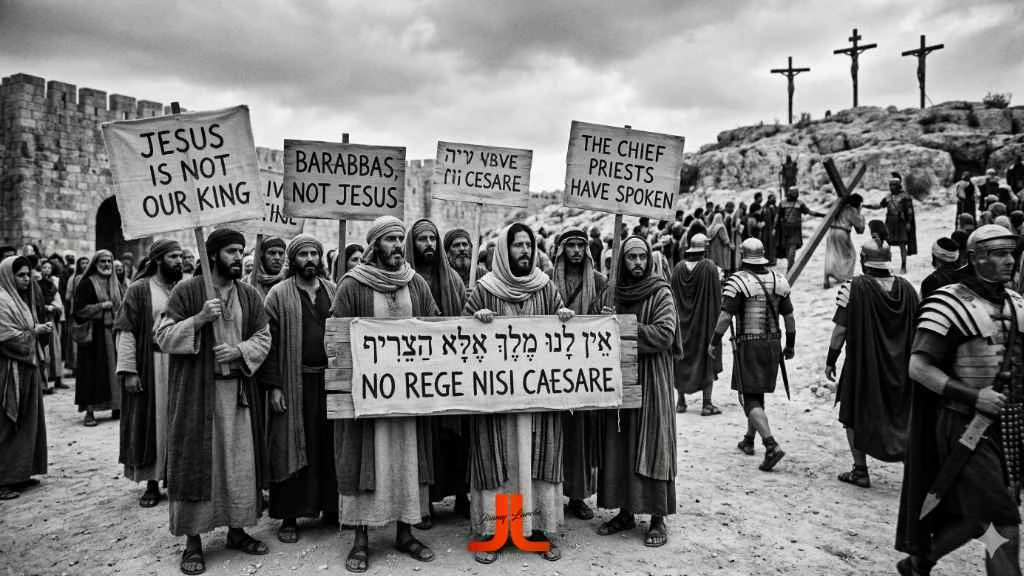
In John 19, we see a moment that mirrors this same contradiction. As Jesus stands before Pilate, the religious leaders make a shocking declaration:
“We have no king but Caesar.”
This wasn’t just a political statement—it was a spiritual exposure.
The Jewish people were living under Roman rule, subject to Caesar. But more than that, they had long claimed God as their true King. Yet in this defining moment, they rejected Jesus—the rightful King standing in front of them—and aligned themselves with Caesar instead.
They claimed to have no king… while clearly serving one.
The Illusion of “No King”
That same illusion is alive today.
The cry of “No Kings” suggests autonomy—that we are free, self-governing, accountable to no one but ourselves. But the reality is far different:
Everyone has a king.
It may not be a crown or a throne, but something is always ruling:
- Success
- Money
- Approval
- Comfort
- Control
- Self
We don’t eliminate kingship—we just relocate it.
Just like in John 19, we can reject the authority we don’t want while quietly submitting to the authority we prefer.
What Your Life Reveals
Here’s the truth we often avoid:
You don’t have to declare your king—your life demonstrates it.
What you chase, what you fear, what you prioritize, and what you obey… all of it points to the authority you are living under.
Your king is revealed in what you believe, what you pursue, and what you give your life to. It’s the cause you’re advancing—the kingdom you’re fighting for, whether it’s your own throne, the world’s, your political ideologies, or God’s.
Because in the end, it’s not about what we protest.
It’s about what we practice.
The King We Resist
The real issue in John 19 wasn’t the presence of authority—it was the rejection of the right authority.
Jesus didn’t come as a tyrant. He came as a servant King—bringing truth, grace, and a kingdom not built on force, but on surrender.
And that’s what makes Him so often resisted.
Because His reign confronts our desire to stay in control.
His truth exposes our misplaced loyalties, our pride, our arrogance, and our sin.
His invitation calls for surrender, not just agreement.
So we resist—not always loudly, but often quietly—by giving our allegiance to lesser kings.
The Choice Still Stands
In John 19, the crowd chose Caesar over Christ.
Today, we still face that same decision.
We can say “No Kings.”
We can reject authority.
We can claim independence.
But at some point, honesty demands the question:
You are serving a king.
The only question is—
Which one?