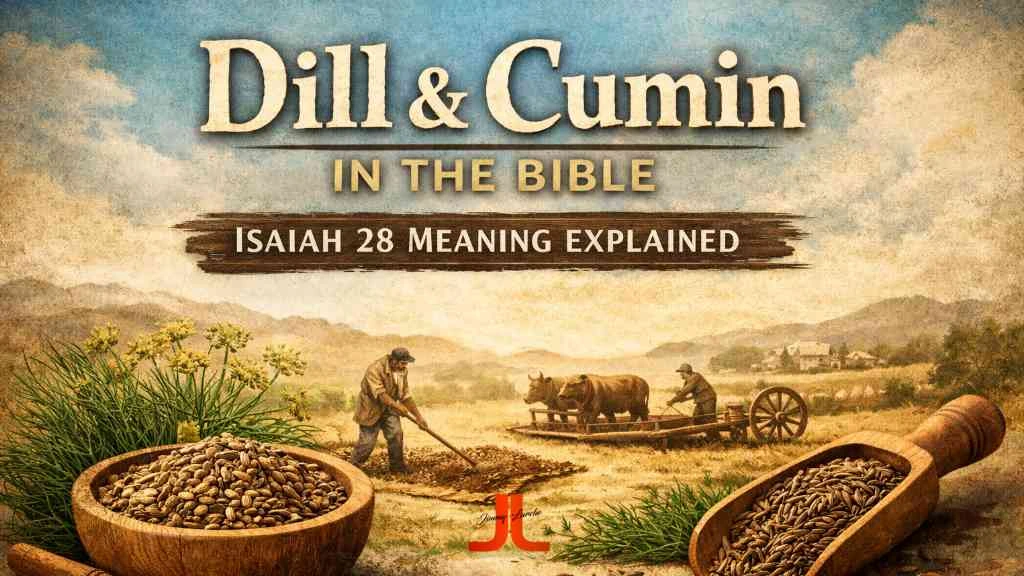
Dill and Cumin in the Bible: Isaiah 28 Meaning Explained
When reading Scripture, it’s easy to overlook small details—especially agricultural ones. But dill and cumin in the Bible carry a powerful message about how God works in our lives.
In Isaiah 28, dill and cumin in the Bible reveal how God works with wisdom, precision, and care in every life.
So what is the meaning of dill and cumin in the Bible, and why does it matter today?
Where Do Dill and Cumin Appear in the Bible?
Dill and cumin are mentioned in Isaiah 28:27 as part of a farming illustration. These spices were common in ancient Israel and were harvested differently than larger crops like wheat or barley.
Their inclusion in Scripture is intentional. God uses familiar, everyday practices to communicate deeper spiritual truths.
Understanding the Context of Isaiah 28
Isaiah 28 is a prophetic warning to Israel. The people had become prideful and resistant to God’s instruction. As a result, God speaks through the prophet Isaiah using an agricultural analogy to reveal His wisdom.
Instead of speaking in abstract terms, God points to farming—something the people understood—to explain how He works.
Tastes of the Bible: Ancient Recipes for Modern Kitchens
Isaiah 28:27 Explained
“Dill is not threshed with a threshing sledge, nor is a cartwheel rolled over cumin; dill is beaten out with a rod, and cumin with a stick.”
This verse explains that different crops require different methods. A farmer would never use heavy tools on delicate spices like dill and cumin because they would be crushed.
Why Dill and Cumin Matter in the Bible
Small and Delicate Crops
Dill and cumin in the Bible represent crops that are small, lightweight, and easily damaged. Because of this, farmers used gentle methods to process them.
This detail is key to understanding the spiritual meaning behind the passage.
The Meaning of Dill and Cumin in the Bible
1. God Works with Precision
Just as a farmer adjusts his methods based on the crop, God adjusts His approach based on the individual.
Dill and cumin in the Bible remind us that God does not treat everyone the same. He knows exactly what each person needs and responds with perfect wisdom.
2. God’s Discipline Is Measured
The illustration in Isaiah 28 shows that not all crops require the same level of force.
In the same way, God’s discipline is never excessive. Dill and cumin in the Bible reveal that God applies the right amount of pressure—never too much, never too little.
3. God Is Wise in Every Season
Isaiah 28:29 concludes by pointing to God’s wisdom:
“This also comes from the Lord of hosts; He is wonderful in counsel and excellent in wisdom.”
Dill and cumin in the Bible ultimately point to this truth: God knows exactly what He is doing in every season of life.
What This Means for Your Life
The message of dill and cumin in the Bible is deeply personal.
- God knows how to handle your life. What you are walking through is not random or careless.
- Your journey may look different from others because God works uniquely in each person.
- Even seasons of difficulty are not meant to destroy you. They are meant to refine you with care and purpose.
Takeaway
Dill and cumin in the Bible may seem like small details, but they reveal something profound.
God is not harsh or random. He is intentional, precise, and wise in how He works in every life.
When you understand the meaning of dill and cumin in the Bible, you begin to see that even God’s discipline is guided by wisdom, care, and perfect timing.